Wellness exam
Policy/add-on type
Pets Best EssentialWellness or BestWellness
Allowance/limit
Published $50 per year in both schedules
Evidence required
Applicable state/age schedule and itemized exam

Match feline routine-care allowances to services your cat will actually use, rather than treating the headline maximum as savings.
Use these checkpoints to frame the literal question before reading the full guide.
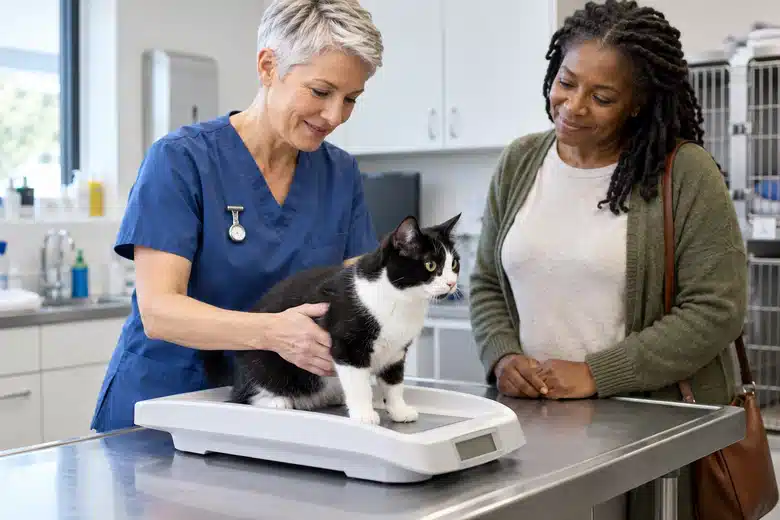
For a cat due for a routine exam, a wellness add-on may reimburse a scheduled allowance while leaving the rest of the bill with the owner. It is not the same promise as accident-and-illness coverage. Its value depends on eligible services used, individual caps and the extra annual cost.
The sections below show how to verify the answer and what can change it.
Make a list with the veterinarian: the exam, any recommended vaccines or tests, parasite prevention and other appropriate preventive services. Do not arrange treatment just to consume an allowance. A kitten’s first-year list and an older cat’s established care plan can produce very different usable benefits.
| Service | Policy/add-on type | Allowance/limit | Evidence required |
|---|---|---|---|
| Wellness exam | Pets Best EssentialWellness or BestWellness | Published $50 per year in both schedules | Applicable state/age schedule and itemized exam |
| Microchip | EssentialWellness / BestWellness | Published $20 / $40 per year respectively | Verify eligibility and whether the cat needs it |
| Vaccines, tests, prevention | Routine-care add-on | Separate schedule categories; no universal amount asserted | Selected schedule, service definitions and category caps |
Pets Best’s undated routine-care page, checked October 8, 2026, presents multiple schedule layouts and states that benefits and prices vary by state and pet age. The two common allowances above illustrate the method; they are not a complete selected contract or a quote. The page describes the wellness options as additions to cat or dog insurance, at extra cost.
Consider invented numbers: an add-on costs $240 a year and the cat uses an eligible $70 exam with a $50 cap plus a $40 service with a $30 cap. Reimbursement totals $80; the owner’s combined spending is $270, consisting of $240 in add-on cost and $30 in unreimbursed care. Without the add-on, the two bills total $110. That $160 difference is hypothetical arithmetic, not a judgment on the published product.
Check whether unused allowance expires, rolls over or can be moved between categories. Never assume a large annual maximum is a flexible bank of money. An already microchipped cat may have no use for a new microchip allowance.
Keep policy terms, deductible, reimbursement and limits beside the quote so the comparison stays consistent.
A visit prompted by vomiting is not automatically a wellness exam merely because it occurs near an annual checkup. Separate preventive and diagnostic invoice lines, then read the relevant benefit definitions. Do not relabel services to fit an allowance.
Only the actual contract can establish rollover or refund rights; a displayed maximum is not a cash entitlement.
Do not assume so. The service purpose and each agreement’s definitions need separate review.
Keep the policy terms beside the price, then continue to rates when the comparison is clear.